%20-%20Copy.svg)





.png)
Saying "the AI is a bubble about to burst" is like saying "all carbs are bad for you." It's an oversimplification that misses the point.
Kids need more carbs than adults. Some carbs are nutrient-dense and essential, others are empty calories. If you're diabetic, your response to carbs is entirely different from someone who isn't.
AI is the same. Some applications are genuinely transformative and economically viable: medical imaging that catches cancers earlier, protein folding that accelerates drug discovery, code assistance that makes developers 30% more productive. Others are arguably overhyped or solving problems that don't exist.
The "AI bubble" narrative conflates real technological progress with questions about valuation and timeline. Just because some AI startups are overvalued doesn't mean the technology isn't revolutionary. And just because AI is revolutionary doesn't mean every investment will pay off.
We're in a hype bubble, not an AI bubble.
The technology deserves more respect than dismissive "bubble" rhetoric. It also deserves more scrutiny than blind investment.
The four questions that actually matter
When companies skip the fundamental questions, you get money chasing impressive demos rather than utility. That's where bubble territory begins: when the story becomes more valuable than the solution.
Here's what to ask instead:
Question 1: What problem is being solved, and is it real?
A clear problem, would be for example radiologists drowning in scans, and so AI flags potential issues for review.
An unclear problem would be using AI to generate another marketing email, without understanding the underlying issue you're trying to fix.
And a fake problem would be revolutionising something that wasn't broken. People may be intrigued at first, but they won't be using it for long.
Question 2: Is there a specific, measurable outcome?
Not "AI will transform healthcare" but "this tool helps ER doctors prioritise patients 30% faster."
Not "this will disrupt education" but "students struggling with algebra get unstuck at 2am when no tutor is available."
Specificity separates reality from hype. Vague promises create vague returns.
Question 3: Is the solution commercially viable as well as technically possible?
This is where it gets interesting. Generative AI can become eyewateringly expensive, and that's before factoring in physical infrastructure, power generation, GPU hosting, and raw materials manufacturing.
Many AI companies are burning cash at rates that make the 2022 tech correction look quaint. Revenue may be impressive, but with negative EBITDA, investors will inevitably get twitchy. We've seen this film before.
Question 4: What else does it need to work?
AI needs data to work, and that's a big problem for many AI businesses.
Take agentic AI. Without the right data, it's like asking a newly hired PA to book dinner without telling them your allergies, party size, food preference, time, or location. You'd be quicker doing it yourself.
Five years in, that PA has learned your preferences by building an accurate knowledge bank and can anticipate the intended outcome. AI is the same—it needs access to relevant and accurate data to fulfil its intended task.
And accessing the right data is harder than you think. Publicly available data is limited, biased, and inaccurate.
ChatGPT doesn’t have access to the BBC, for example.
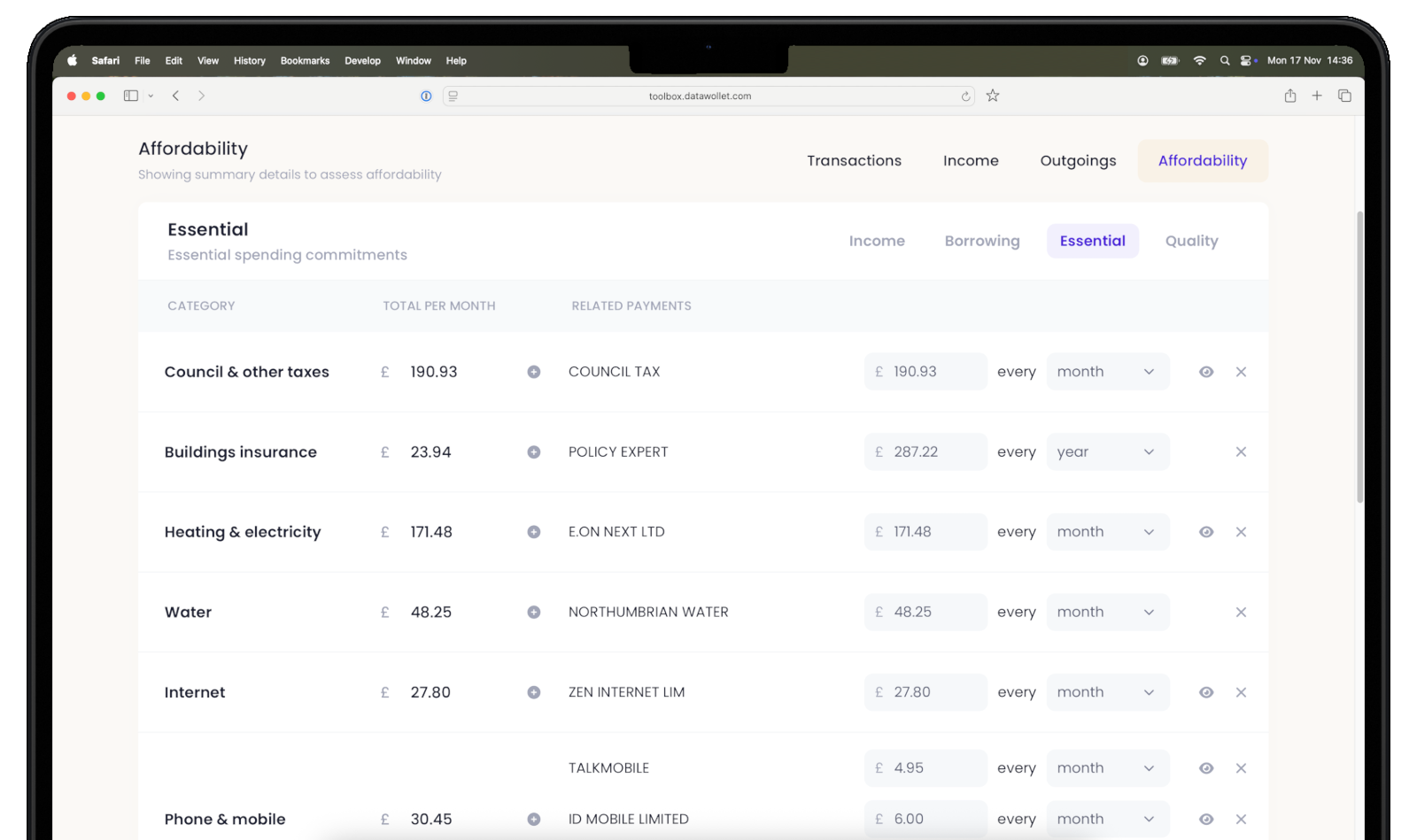
Even if companies use AI leveraging their proprietary data, say, a bank, they have loads of data but not necessarily the right data. The average UK consumer has relationships with around six financial institutions (pensions, mortgages, etc.). If you're lucky and they do use open banking - only 13% of UK adults use open banking to share data – you'll get access to current account,s credit cards and sometimes savings accounts. But you'll be missing utilities, insurances, other savings, ISAs, and debt. That bank will therefore always have a very limited view of their customer.
Agentic AI will be game-changing, but only as part of wider infrastructure. AI businesses that are dependent on data but don't own it are currently hitting their heads against an invisible ceiling.
The overvaluation problem - it's complicated
Not all overvaluation is created equal.
Some AI companies could be considered fads — they have high growth but low retention. Think Cabbage Patch Kids or Labubu. The hype was real, but it didn't last.
Others solve real problems but need huge investment to reach commercial stability. Uber suppressed consumer costs to drive adoption, burning through $25 billion in investment. Their bet: achieve scale to gain leverage to reach profitability. It worked (in 2023), but took over a decade and was only achieved after massive scaling, price hikes, and reduced driver pay.
Here's the kicker: that was when money was cheap.
We no longer have 0.5% interest rates and economic stability. We have political uncertainty, 5% rates, and inflation. Many AI companies are following the Uber playbook in a fundamentally different economic environment.
Some will make it. Many won't.
My take
We've only scratched the surface of what AI can do. It will only become more impactful and valuable over time.
But we're getting carried away with the shiny new thing without figuring out what we're using it for, which means it's really hard for clients to demonstrate ROI and move beyond a trial into production.
Adoption and transformation rates are still incredibly low—around 5% according to MIT's State of AI Report 2025. That's as much to do with people, process, and data as it is the AI. You need all four together before any client company can see positive benefits and ROI.
Because we're all still figuring it out, some AI companies aren't currently commercially viable and don't really know how to get there. Understanding is lacking among both investors and buyers, especially regarding the different AI options available, their relative pros and cons, risks, and economics.
The bottom line
The technology is real. The transformation is coming.
But like the internet boom, many companies will fail while the underlying revolution succeeds.
The winners will be those who ask the right questions: What specific problem am I solving? What measurable outcome am I creating? And which type of AI actually delivers that outcome in a commercially viable way?
In our next article, we'll dig into that last question—because understanding which type of AI solves your specific problem is critical, and the cost differences can be over 100x.